


Scroll down for the latest politics news and live updates.
Key Events
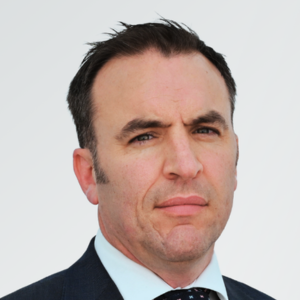
Rishworth insists new investor home loans plunge ‘a good thing’
Labor frontbencher Amanda Rishworth has declared a 30 per cent collapse in new investor home loans is a “good thing” as the government grapples with the fallout from Budget tax changes.
Data released on Wednesday from the Australian Bureau of Statistics showed total loan commitments fell by $15 billion between the start of July and the end of September, the steepest fall in records going back 24 years.
New property investor loans dived by 30.6 per cent during the September quarter while the 8.6 per cent decline in first-homebuyers during that period was even steeper than the overall 5.3 per cent drop in owner-occupiers.
“If you drill down into it, a concentration of that reduction being in investors buying existing houses. There’s been a shift to investors investing in new housing, and that’s a good thing because that does add to supply,” Ms Rishworth told the ABC on Thursday.
“We want to see more homeowners, first home buyers, into their own home, and our policies are certainly geared towards that.”


Wrapping up
Thank you for following Thursday’s live politics updates.
Scroll down for a recap of today’s events.
US Ambassador gushes over “incredible” AUKUS project during WA visit
Donald Trump’s newly arrived ambassador to Australia has praised the “incredible” AUKUS project and predicted young people will soon also get caught up in the “excitement” of the $368 billion nuclear-powered submarine project.
In Western Australia, US Ambassador David Brat has toured the visiting Virigina-class submarine USS Colorado which is currently undergoing a scheduled maintenance period at HMAS Stirling Naval base.
“It’s an absolute honour to be in Australia,” the former two-term Republican congressman said in one of his first public appearances since assuming his high-profile diplomatic posting to Canberra late last month.
“And the one thing I wanted to do right off the bat is thank all of the armed services folks from both sides, Australia and the United States, in the room with us today,” Ambassador Brat said standing alongside Acting Prime Minister Richard Marles.
“When the young people in Australia and the United States see the excitement here and what military is doing and how we’re all sharing together, it’s incredible”.

Westpac CEO says government spending cuts will bring down inflation, interest rates
Westpac’s chief executive Anthony Miller says a reduction in Government spending can reduce inflation and bring down interest rates.
“If inflation is, yes, brought within the target range, the Reserve Bank is going for, that should then naturally follow that interest rates come back,” he told the House of Representatives economics committee on Thursday.
He made the call on government spending to a parliamentary committee hours after his ANZ counterpart Nuno Matos made a similar observation.
“The current inflationary challenge in Australia is fundamentally because the capacity of the economy to absorb the demand is not where it needs to be,” Mr Miller said.
“So, therefore any pullback of any demand - public or private - will contribute to reducing the inflationary challenge that we currently navigate.”
Mr Miller said solving Australia’s weak productivity crisis should be a “far more appropriate priority for the country”.
“That’s the only long-term, sustainable unlock in terms of solving inflation,” he said.
“I would argue, that again, we continue to focus everywhere in every way on the demand side of the equation - I think the whole country need to be much more focused on the supply side and the capacity side of the economy and how do we therefore drive productivity.”
Westpac boss likens housing downturn to 2008 GFC
Westpac chief executive Anthony Miller says home loan applications are beginning to recover.
He made the observation to a parliamentary committee a day after new data showed a record $15 billion plunge in new home loans during the September quarter, following a 30.6 per cent decline in new investor loans over three months.
“We are starting to see home loan applications begin to lift as buyers adjust to the environment,” he told the House of Representatives economics committee on Thursday.
“This year we’ve seen a downturn in the housing market which is understandable given five interest rate increases and policy changes in the Federal Budget.”
Mr Miller said the downturn was similar to the four other downturns since the global financial crisis in 2008.
But he said the supply of affordable housing remained a longer-term challenge, despite Westpac’s new construction lending being higher this year than 2025.
“But with construction, labour and material costs rising, greater investment is delivering fewer homes,” he said.

MARK RILEY: COP has always been an expensive exercise in futility
In 2009, Former Prime Minister Kevin Rudd had seen COP15 as a pivotal opportunity for the world to finally sign up to the meaningful, united action he had long advocated for.
Instead — like most COPs — it turned out to be a hideously expensive exercise in orchestrated futility.
Rudd found himself frozen out of the frontline discussions by the main players, who had become wary of his unwillingness to accept another hollow, non-binding agreement.

The climate calamity at Copenhagen sounded the death knell on Rudd’s prime ministership.
Within months, he would dump his signature Carbon Pollution Reduction Scheme after it had been rejected by the Greens in the Senate. Shortly after that, the Labor Party dumped him.
These and other repressed memories from that frozen farrago seeped back into consciousness this week as Anthony Albanese took the stage at COP31 in Turkey.
Again, many noble statements will be delivered. But, yet again, it will become just another massively expensive snow job as leaders conspire to say so much yet do so little.
Read more from the Seven Network’s political editor Mark Riley.
NAB to fork out $127 million for underpaying workers
NAB has agreed to pay $127 million owed to underpaid workers over more than a decade after signing the biggest ever enforceable agreement with the industrial umpire.
The Fair Work Ombudsman on Thursday announced that National Australia Bank would be paying out $127m owed to 65,999 staff who had been underpaid between 2012 and 2026, plus $34m in interest and $8m in super as part of an enforceable undertaking.
Another $2m will be paid to a Commonwealth Consolidated Revenue Fund.
NAB notified the Fair Work Ombudsman in 2019 after it became aware of significant errors with its most recent enterprise agreement.
This led to a review of employee entitlements dated back to 2012, with the underpayment including minimum wages for ordinary hours, penalty rates, shift loadings and overtime, meal and standby allowances, termination payments, super and annual, personal and long-service leave.
But the underpayments had continued, with NAB discovering subsequent errors when implementing a new enterprise agreement in 2024.
Fair Work Ombudsman Anna Booth said the NAB underpayment scandal was the result of the bank failing to co-ordinate key business functions like payroll, industrial relations, technology, risk management, audit and legal.
ANZ chief says high government spending is ‘dangerous situation’
ANZ’s chief executive Nuno Matos says government spending is too high and crowding out private sector investment as AI leads to a “dangerous situation” of more competition for capital.
“We always want the private sector to lead the investment and the spending in order to make an economy sustainable,” he told the House of Representatives economics committee on Thursday.
“I think that’s very clear. Now in the short term, in the specific cycle that you may have, there might be cycles where the public side has to jump in and support the economy, especially in recessions, COVID was a good example.
“Through the cycle, a market economy wants the private capital to be the one leading the spending and the investment.”
Asked by Liberal MP Cameron Caldwell if government spending needed to be making a smaller contribution to investment, Mr Matos said: “I think everybody would love to have that equation”.
Mr Matos said the building of AI data centres was also leading to a fight for capital during a time of higher government spending on defence and transport infrastructure.
“It’s nothing seen in the past so we have a very curious situation in the world where we have the equity markets at record highs, basically because of the tech wave and basically because of the AI wave but at the same time, you have record highs of interest rates,” he said.
“It’s a dangerous situation for the world. So, in this context, administrations in the world will have to reflect how do they participate in this competition for capital meaning how much can they spend versus the rest of players that are also competing for capital.”
‘Mortgages are least profitable product’: ANZ chief claims
ANZ’s chief executive has suggested mortgages are the least profitable product of his bank.
Nuno Matos made the claim after Labor MP Ed Husic quoted an Australia Institute think tank report released this month calcuating that banks made a $266,000 profit on an average mortgage of $731,000 - marking a $40,000 increase since the Reserve Bank began hiking rates in February.
“I will be very direct to that question: the mortgage business, it’s one of the least profitable business in banking in Australia,” he told the House of Representatives econoomics committee on Thursday.
“And it has reduced its profitability year after year at least since the last 20 years.
“It’s a very, very close to cost of capital business and if I had to say something in the case of ANZ, the profitability of the mortgage business in the last five years went down every single year so I would dispute the conclusion of that report which I didn’t see and I would be delighted to show it to you personally, one to one, what I just said.”
Mr Husic replied: “Do you reckon an average mortgage holder would feel that you’re not very profitable?”
Mr Matos said higher interest rates were hurting borrower.
“I absolutety understand, absolutely understand, that for a mortgage holder, interest rates being higher, hurt them,” he said.
“The banks are not getting better margins on mortgages. Actually, it’s the opposite so the problem is elsewhere and I can demonstrate that to you, mathematically.”
ANZ CEO denies taking advantage of Australians as profit soars
ANZ chief executive Nuno Matos has denied taking advantage of Australians during a cost-of-living crisis after the big four bank reported a 31 per cent profit increase.
“The first thing I would say is the obvious: the situation is challenging and all Australians, I’m sure, are feeling the pressure of cost of living,” he told the House of Representatives economics committee under questioning from its Labor chairman Ed Husic.
“Cost of living means inflation is high, interest rates are high and those two things are certainly not improving the quality of life of Australians.
“That doesn’t mean at all that ANZ is taking advantage of that. That’s not the case at all.
“We are just doing our job and delivering services to customers.”
ANZ’s full-year cash profit for the 12 months to September 30 grew by 31 per cent to $7.6 billion.
Mr Matos received a remuneration of $3.7 million off a base salary of $2.5m with bonuses, ANZ’s latest annual report for 2026 revealed.

ANZ CEO vows to learn from mistakes after $250 million fine
ANZ chief executive Nuno Matos has told a parliametary enquiry into the big four banks it is learning from its mistakes that led to a $250 million fine..
He began by acknowledging ANZ has been repaying customers, 11 months after a Federal Court judge slapped massive penalties on Australia’s fourth biggest bank.
“We have paid customers back for our mistakes and acted quickly to stop any further harm,” Mr Matos told the House of Representatives economics committee on Thursday.
“But beyond this, we are fixing the underlying conditions that allowed those problems to occur.
“This transformation takes time to get right and to make the improvements sustainable.”
Get the latest news from thewest.com.au in your inbox.
Sign up for our emails